Cabling and bracing in Georgetown — support for the live oak you don't want to lose
A hundred-year live oak with a bark-included fork over the roof doesn't need to come down. It needs a cable in the right place, installed before the next February glaze, and a look every few years.
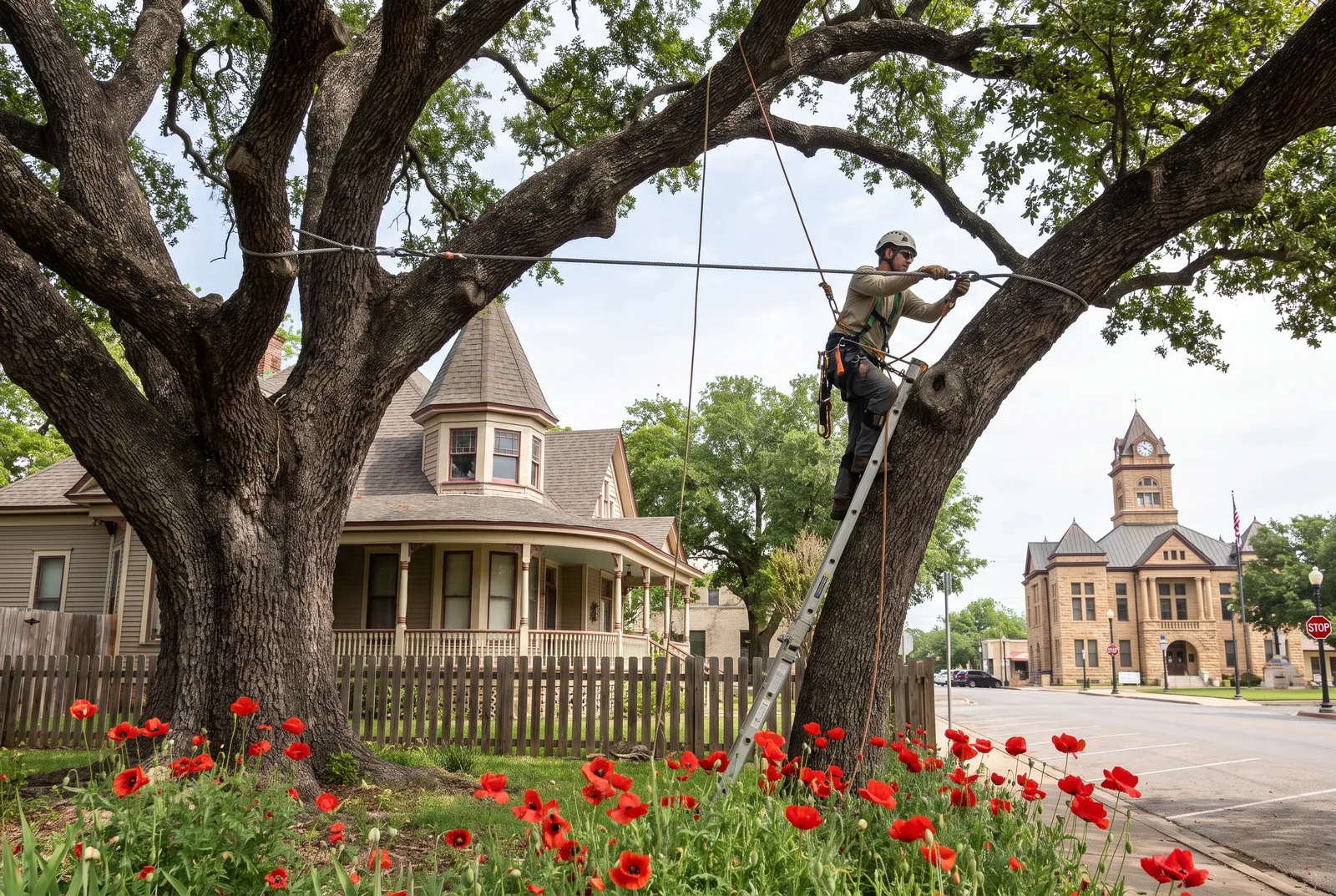
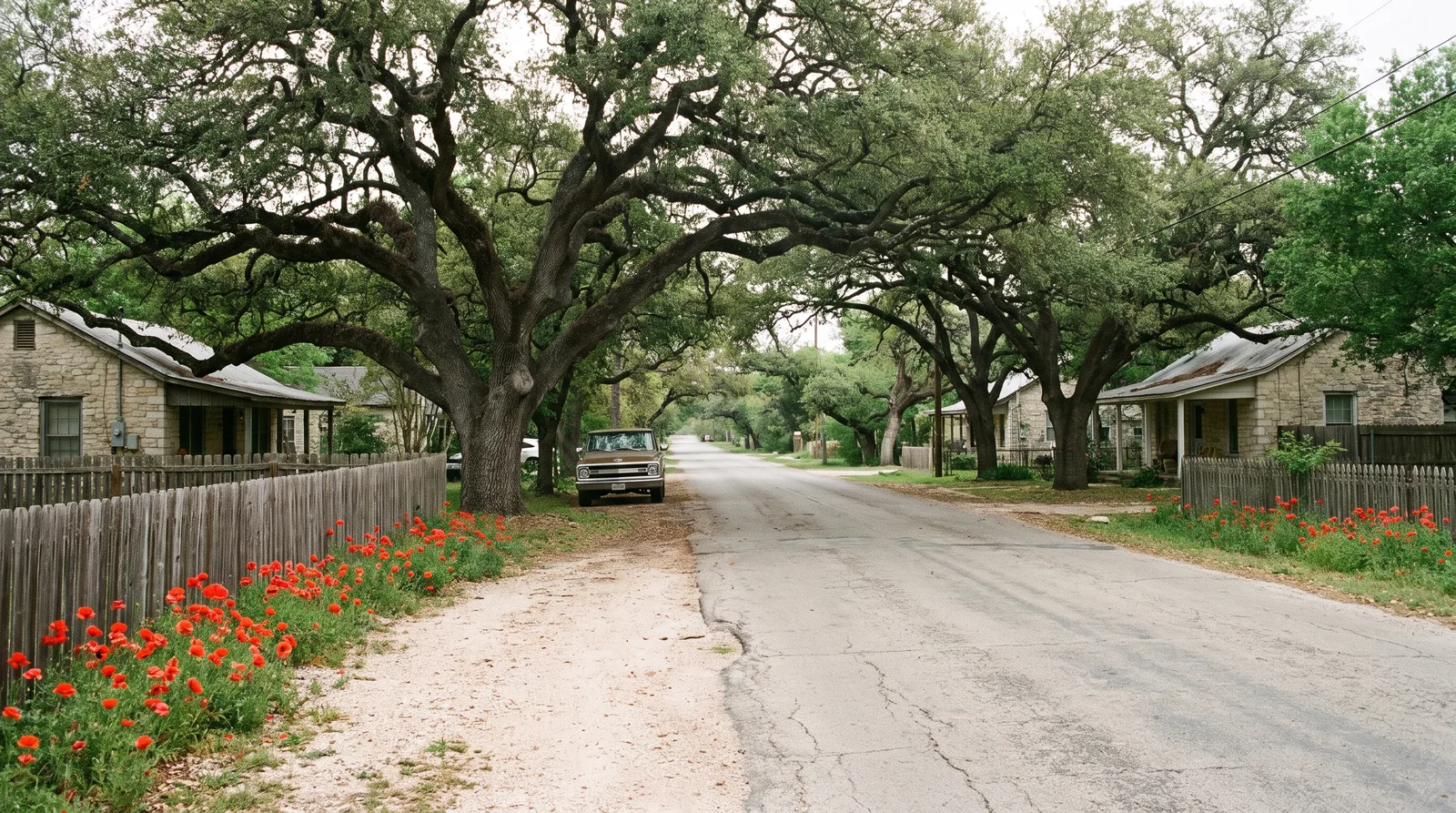
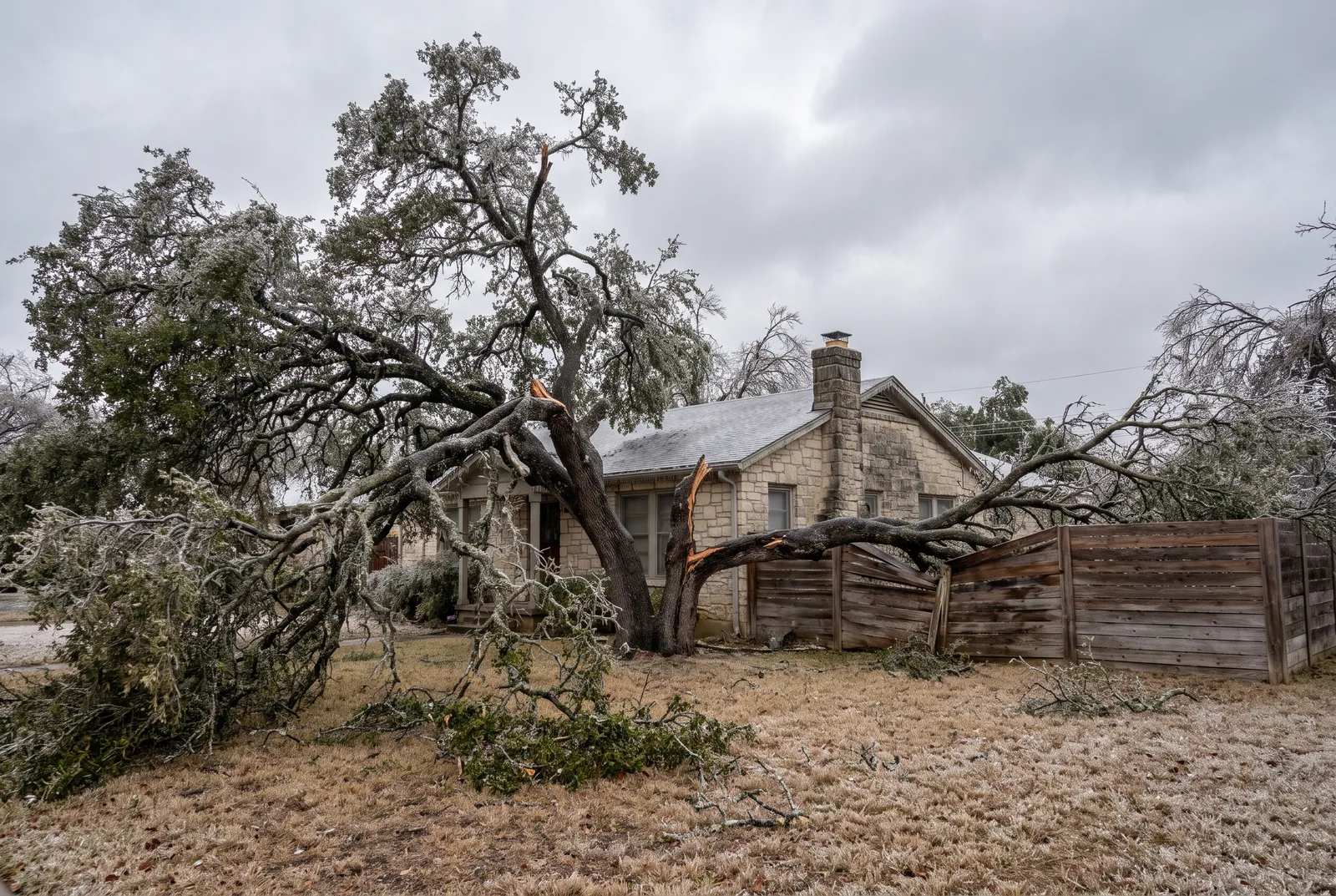
The live oaks that make Georgetown Georgetown — the ones over the porches off University Avenue and the square, the multi-trunked giants in Old Town and Berry Creek — are exactly the trees that fail in ice. They grow long horizontal leaders from forks that formed a century ago, and where two trunks meet with bark pinched between them, there's no real wood connection. A half-inch of ice, seven thousand pounds of extra load, and the fork opens. Most of those trees are worth far more standing than gone, and most of them can be kept with a support system.
Cabling installs a high-strength steel or synthetic cable between leaders in the upper crown to limit how far they can move apart; bracing installs threaded rods through a fork or a crack to hold it together. Done right — to the ANSI A300 Part 3 standard, with the hardware sized to the load and the anchors placed at two-thirds of the way up the leaders — it's invisible from the ground and adds decades. Done wrong, with a chain around the trunk or a cable too low, it does nothing or makes it worse. Our arborist assesses the fork, prunes the end weight so the cable isn't fighting a lever, installs the system, and puts it on a three-year inspection schedule.
What's included
Fork & crack assessment
Included bark, cracks, decay at the union, lean and the target underneath — is support worth it, or is it a removal?
Static cabling
Extra-high-strength steel cable and through-hardware in the upper crown, sized to the leaders.
Dynamic cabling
Synthetic rope systems that let the tree move naturally while preventing failure.
Bracing rods
Threaded rods through split forks and cracks, with cabling above to share the load.
End-weight reduction
Long leaders reduced back to laterals so the support system isn't carrying a lever arm.
Inspection schedule
Hardware checked at three years and after any major storm; adjusted or replaced as the tree grows.
Cabling & bracing cost in Georgetown, TX
| Job | Typical price | Notes |
|---|---|---|
| Single cable, one fork | $450 – $1,000 | Includes pruning around the anchors |
| Two or three cables, multi-leader live oak | $900 – $2,200 | Most big live oaks |
| Bracing rods through a split fork (plus cable) | $700 – $1,800 | Crack or included-bark union |
| Dynamic (synthetic) system | $600 – $1,600 | Younger or more flexible trees |
| Arborist assessment & report | $150 – $350 | Credited toward the work |
| Three-year inspection | $100 – $200 | Per tree |
These are 2026 Williamson County ranges so you can budget. Your written price is itemized — removal, rigging or crane, hauling, stump grinding, any permit paperwork — and good for 30 days.
Recent work
Questions we get about cabling & bracing
Will a cable keep my live oak from splitting in an ice storm?
It dramatically improves the odds. A cable can't make a fork strong, but it limits how far the leaders can spread under load and shares the weight between them. Combined with end-weight reduction, it's how the big live oaks around the square have survived every ice storm since the hardware went in. A tree that's already cracked through gets rods as well.
How long does cabling last?
Steel systems, 15 to 25 years with inspections; synthetic systems, 8 to 12. The tree grows, the hardware needs checking and eventually re-doing, which is why we put every cable on a schedule.
Is my tree worth cabling or should it just come down?
Worth it: a healthy live oak or pecan with one weak fork and a valuable spot in the yard. Not worth it: a tree with decay at the union, a cedar elm that's already dropped a leader, or a hackberry. Our arborist tells you which before you spend money; the assessment is credited toward whatever we do.
Do you cable trees in Sun City?
Regularly. The live oaks planted in the first phases in the mid-1990s are big enough now to have exactly the forks that fail, and the Community Association has approved cabling on plenty of lots.
Will I be able to see the cable?
Barely, if at all. It's installed high in the crown, above the point where the leaders would fail, and the hardware weathers to the color of the bark within a year.